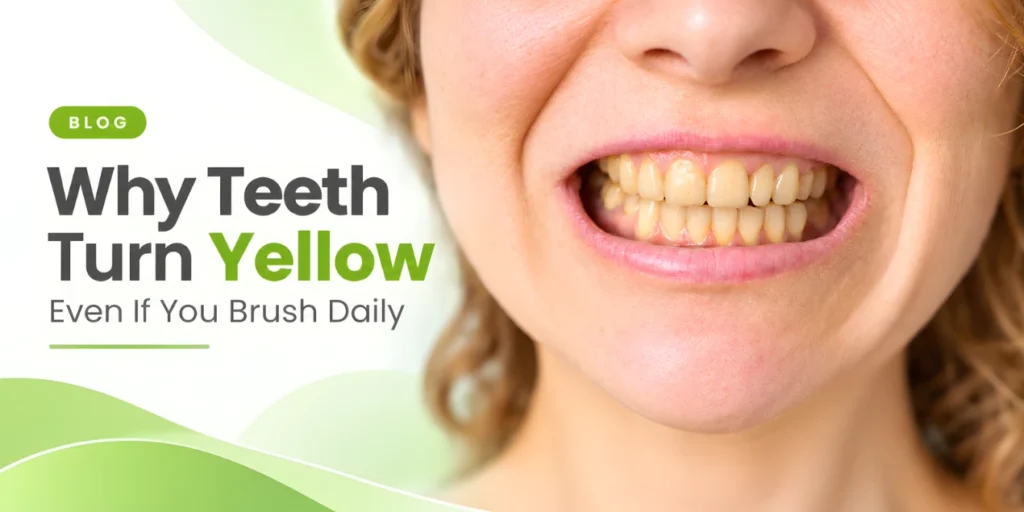
If your teeth still look yellow despite brushing twice a day, it does not necessarily mean your oral hygiene is poor. Natural tooth colour, thinning enamel, stains from food and drinks, tartar build up and changes inside a tooth can all affect how your smile looks.
Brushing removes plaque and some surface stains, but it cannot change the natural colour of the dentin beneath your enamel. The right solution depends on whether the discolouration comes from surface deposits, your tooth’s natural structure or an underlying dental issue.
Yellow Teeth Don’t Always Mean Poor Oral Hygiene. Understand the Causes of Tooth Discolouration, Learn How to Protect Your Enamel, and Make Informed Choices for a Healthier, Brighter Smile with Expert Dental Care.
Why Are My Teeth Yellow Even After Brushing?
Understanding the cause is the first step towards choosing an appropriate way to manage yellow teeth.
1. Your Natural Tooth Colour May Be Yellowish
Healthy teeth are not always bright white. Their natural colour varies between individuals because of differences in enamel thickness, translucency and the dentin underneath.
Enamel is the hard, outer layer of a tooth. Dentin is the underlying tissue and naturally has a yellowish colour. Because enamel is partly translucent, the dentin influences the overall shade of your teeth.
This explains why some people have naturally cream-coloured or slightly yellow teeth even when they brush regularly and maintain good oral hygiene.
What can you do?
Maintain your usual oral hygiene routine rather than brushing harder to achieve a whiter shade. If you are concerned about your natural tooth colour, a dentist can assess your teeth and discuss whether any cosmetic treatment is appropriate.
2. Enamel Wear May Make Your Teeth Look More Yellow
Enamel protects the inner structures of your teeth, but repeated exposure to acids and excessive mechanical wear can gradually damage it.
When enamel becomes thinner or more translucent, the yellowish dentin underneath may become more visible. This can make teeth appear yellower even if the surface is clean.
Factors associated with enamel wear include:
- Frequent exposure to acidic drinks, such as soft drinks and fruit juices.
- Acid reflux that brings stomach acid into the mouth.
- Brushing too aggressively.
- Other forms of tooth wear, including grinding.
The American Dental Association explains that dental erosion involves the chemical loss of tooth structure caused by acids.
What can you do?
Use a soft-bristled toothbrush and fluoride toothpaste, and avoid aggressive brushing. Limit frequent exposure to acidic foods and drinks. After consuming something acidic, rinse with water and wait about an hour before brushing.
If you notice increasing sensitivity, translucent tooth edges or a persistent change in colour, arrange a dental assessment.
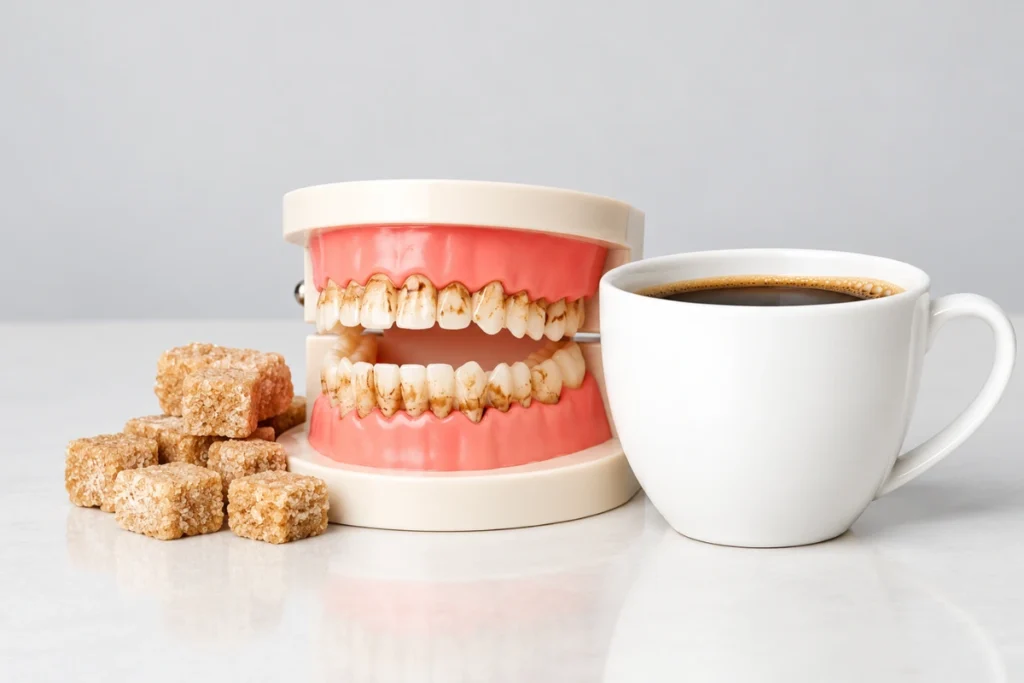
3. Coffee, Tea and Certain Foods Can Leave Surface Stains
Your daily habits can contribute to tooth discolouration even when you brush consistently.
Coffee, tea, red wine and other deeply pigmented foods and drinks can leave stains on the outer surface of teeth. Tobacco use is another recognised cause of staining.
These are known as extrinsic stains, meaning the discolouration primarily affects the tooth’s outer surface.
Brushing and some whitening toothpastes can help remove certain surface stains, but stubborn deposits may require professional cleaning. The American Dental Association distinguishes these external stains from intrinsic discolouration, which develops within the tooth.
What can you do?
- Drink water after coffee, tea and other staining beverages.
- Reduce frequent exposure to deeply coloured drinks where practical.
- Brush twice daily with fluoride toothpaste.
- Clean between your teeth every day.
- Avoid tobacco products.
If stains persist, your dentist can determine whether professional cleaning or another approach would be more appropriate.
4. Plaque and Tartar May Be Affecting Your Smile
Plaque is a soft film of bacteria that develops on teeth. Regular brushing and cleaning between teeth help remove it.
If plaque is not adequately removed, it can harden into tartar, also called dental calculus. Tartar may appear yellowish or brownish, particularly around the gumline.
Unlike soft plaque, hardened tartar cannot be reliably removed with routine brushing at home.
What can you do?
Maintain daily oral hygiene and arrange professional dental cleaning when recommended. A dental professional can remove hardened deposits and assess your gum health.
Remember that cleaning and whitening are different. Cleaning removes plaque, tartar and certain external stains; it does not necessarily change the natural colour of your teeth.
5. Ageing Can Gradually Change Tooth Colour
Teeth can become more yellow with age, even when you continue to brush and floss regularly.
Over time, enamel may become thinner or more translucent, allowing the underlying dentin to show through more clearly. The gradual accumulation of external stains can also contribute to darker-looking teeth.
This change does not automatically indicate poor oral hygiene or dental disease. However, a sudden or uneven change in colour should not simply be attributed to ageing.
What can you do?
Attend regular dental check-ups so your dentist can distinguish natural colour changes from staining, enamel wear or other dental conditions.
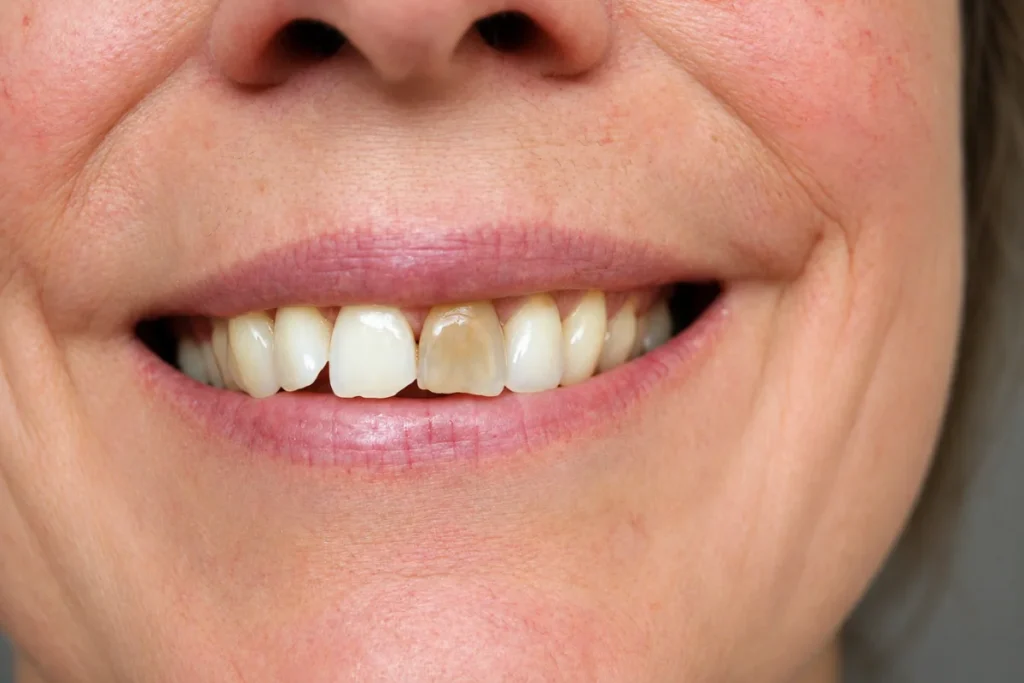
6. Some Discolouration Develops Inside the Tooth
Not every stain is located on the outside of a tooth. Intrinsic discolouration develops within the tooth’s internal structures and may not respond to brushing or routine cleaning.
Possible causes include:
- Dental injuries or trauma.
- Certain medications taken during tooth development.
- Developmental conditions affecting enamel or dentin.
- Changes in the internal tissues of a tooth.
- Certain dental restorations that affect the appearance of the tooth.
The American Dental Association identifies ageing, developmental factors, dental trauma and some medications among the potential causes of intrinsic tooth discolouration.
What can you do?
If one tooth becomes noticeably darker than the others, particularly following an injury, consult a dentist. The appropriate treatment depends on the cause, and whitening alone may not address the underlying problem.
7. Whitening Toothpaste May Not Change Your Natural Tooth Shade
Whitening toothpaste can help remove certain surface stains, but it is not the same as a bleaching treatment.
Many whitening toothpastes work primarily by removing surface deposits and stains. They generally have limited ability to change the underlying colour of the tooth itself.
This is why switching whitening toothpastes or brushing more frequently may not make a naturally yellow tooth significantly whiter.
What can you do?
Choose a fluoride toothpaste intended for daily use and follow the manufacturer’s instructions. Avoid aggressive brushing and excessive use of abrasive products.
If your teeth remain yellow despite good oral hygiene, a dental assessment can help establish whether the concern is caused by surface stains, natural tooth colour or another condition.
How Can You Tell What Is Causing Your Yellow Teeth?
The appearance of your teeth can offer clues, but colour alone cannot confirm the cause.
| What you notice | Possible explanation | Appropriate next step |
| Teeth have always looked slightly yellow | Natural tooth colour | Discuss concerns with a dentist if desired |
| Surface stains after coffee or tea | Extrinsic staining | Review oral hygiene and consider professional cleaning |
| Yellow or brown deposits near the gumline | Plaque or tartar buildup | Arrange a dental examination and cleaning if needed |
| Teeth look increasingly yellow or translucent | Possible enamel wear or increased dentin visibility | Seek dental assessment |
| One tooth becomes darker than the others | Possible internal change or previous injury | Arrange a dental examination promptly |
| Persistent discolouration that does not improve with brushing | Several possible causes | Ask a dentist to identify the underlying reason |
These are possible explanations, not a diagnosis. A dental professional can examine your teeth and gums to determine the most appropriate next step.
Can Yellow Teeth Become Whiter?
Yes, some types of tooth discolouration can be improved, but the appropriate approach depends on the cause.
- Surface stains: Improved oral hygiene and professional cleaning may help.
- Tartar deposits: Professional scaling may be needed.
- Natural tooth colour: Cosmetic options may be considered after a dental assessment.
- Internal discolouration: Treatment depends on the underlying cause and may require options other than conventional whitening.
Professional teeth whitening may lighten certain types of discolouration in natural teeth. However, it does not change the colour of crowns, veneers, fillings or implants.
Whitening can also cause temporary tooth sensitivity or gum irritation. A dentist should check your oral health and explain the potential benefits and risks before treatment.
If you are considering a cosmetic treatment, explore teeth whitening in Dubai at La Clinique to learn more about the service and discuss whether it is suitable for your needs.
How to Prevent Further Tooth Discolouration
Although you cannot always change your natural tooth shade, good daily habits can help reduce avoidable staining and protect your oral health.
1. Brush Twice Daily
Brush twice a day with fluoride toothpaste and a soft-bristled toothbrush. Use gentle movements rather than applying excessive pressure.
2. Clean Between Your Teeth
Use dental floss or another suitable interdental cleaning aid daily to help remove plaque from areas your toothbrush may miss.
3. Limit Frequent Exposure to Staining Drinks
Coffee and tea can contribute to external staining. Drinking water after these beverages may help clear residual drinks from your mouth.
4. Protect Your Enamel
Limit frequent exposure to acidic drinks, avoid abrasive DIY whitening methods and do not brush immediately after consuming acidic foods or drinks.
5. Attend Regular Dental Check-Ups
Routine appointments help your dentist identify tartar, gum problems, enamel wear and other conditions that may affect your teeth.
6. Avoid Unverified Whitening Remedies
Do not use lemon juice or other acidic household ingredients to whiten teeth. Avoid aggressive scrubbing with abrasive powders, which may damage tooth surfaces.
Conclusion
If your teeth look yellow despite brushing every day, the cause may be your natural tooth colour, enamel wear, dietary staining, tartar buildup or internal discolouration.
The most effective next step is to identify the cause rather than brushing harder or relying on unverified whitening remedies. Good oral hygiene and professional cleaning can help manage surface deposits, while other types of discolouration may require a different approach.
If you are concerned about persistent tooth discolouration, consult a dental professional before deciding on a cosmetic treatment.
To learn more about available options, visit La Clinique’s teeth whitening and discuss your concerns with a dental professional.