
What Is Composite Bonding?
Composite bonding, sometimes called dental bonding or direct composite bonding, uses a resin material similar to that used for tooth-coloured fillings. The dentist chooses a shade, prepares the tooth surface, places the resin in layers when needed and sculpts it to blend with the surrounding teeth. The material is then hardened and polished.
Unlike a dental crown, which covers much or all of the visible tooth, bonding can be limited to the area that needs improvement. A small chip might need only a small addition. A shorter tooth may need its edge rebuilt. In some cases, resin is placed across much of the front surface, an approach often described as a direct composite veneer.
Dental bonding is commonly used to address small gaps, chips, discolouration, and changes in tooth proportions. Cosmetic bonding should not be confused with treating a cavity: while the same family of materials may be used, the diagnosis and treatment goals differ.
Unlike crowns that cover the entire tooth, composite bonding targets only the area that needs refinement blending seamlessly with your natural teeth.
What Can Composite Bonding Improve?
The most common reasons for considering composite bonding teeth are minor chips, uneven edges, small spaces between teeth and differences in tooth size. It can also disguise selected surface imperfections or build up a tooth worn by grinding or erosion. For a small concern, one tooth may be enough. Other patients ask whether several visible teeth can be made more symmetrical.
The important distinction is between changing the appearance of a tooth and changing its actual position. Bonding adds material; it does not move teeth or correct the underlying bite. Adding resin to disguise significant crowding may create bulky shapes that are difficult to clean. Similarly, trying to close a large gap with resin alone can make the neighbouring teeth look unnaturally wide.
The cause also matters. A newly chipped tooth after an injury requires assessment, not simply a cosmetic repair. Worn edges may indicate grinding or acid erosion. University of Bristol guidance on tooth wear explains why prevention and identifying the cause are as important as rebuilding the tooth.
Who Is A Good Candidate For Bonding?
Bonding is often considered for someone with healthy teeth and gums, enough sound enamel to support adhesion and a relatively small, localised concern. It may appeal to people who want to preserve as much natural tooth as possible or prefer an option that can be repaired rather than replacing a full restoration.
Your dentist will also consider expectations. You might be aiming to soften a sharp corner, lengthen an edge or create more even proportions. These are more predictable goals than asking bonding alone to produce a dramatically brighter, perfectly aligned smile in teeth with complex problems.
Bonding may be less suitable when there is untreated decay, active gum disease, extensive tooth damage, severe crowding, insufficient remaining tooth tissue or biting forces likely to repeatedly fracture the material. Heavy grinding does not always rule it out, but it changes planning and maintenance.
How Does A Dentist Decide Whether Bonding Is Appropriate?
A proper consultation begins with your concern and what outcome would feel worthwhile to you. The dentist then examines tooth surfaces, existing fillings, gum health, the amount of enamel present and how the upper and lower teeth meet. They may ask about jaw clenching, nail biting, previous chipping, tooth sensitivity and frequent acidic drinks.
Photographs can help you and the dentist discuss shape and proportions. An impression, scan or trial mock-up may be useful if several teeth need changes. Dental X-rays are not necessary for every cosmetic bonding case, but may be recommended when a cavity, trauma, deeper fracture or another dental concern is suspected.
This assessment sometimes changes the plan. If the issue is discolouration alone, whitening might be more appropriate. If teeth are noticeably rotated, aligners may be considered before aesthetic additions. If teeth have become very short through wear, treatment should address the cause and possible bite changes before discussing the finished shape.
At La Clinique ME in Jumeirah Lakes Towers, smile assessment can be discussed within the clinic’s cosmetic dentistry services. The decision should be guided by tooth health and function, not by the number of teeth a patient asks to bond.
What Happens During Composite Bonding Treatment?
First, the dentist discusses the planned shape and shade. If whitening is also being considered, it may need to happen before choosing the composite shade because whitening products do not lighten existing resin restorations. Existing dental restorations such as crowns, veneers, and fillings do not respond to bleaching products in the same way as natural teeth.
The tooth is cleaned and its surface prepared for bonding. Depending on the clinical situation, a mild etching gel and bonding liquid are applied to create a reliable connection. The dentist adds resin carefully, shapes the contours and uses a special light to set the material. Finally, they check the bite, refine the edges and polish the surface.
Small cosmetic additions often need little or no local anaesthetic, although that is not a promise for every patient. Treatment of a chip associated with decay or sensitivity may involve other steps. One straightforward tooth may take roughly 30 to 60 minutes, while multiple teeth, complex wear or detailed smile planning may require longer or more than one visit.
What Are The Main Advantages Of Composite Bonding?
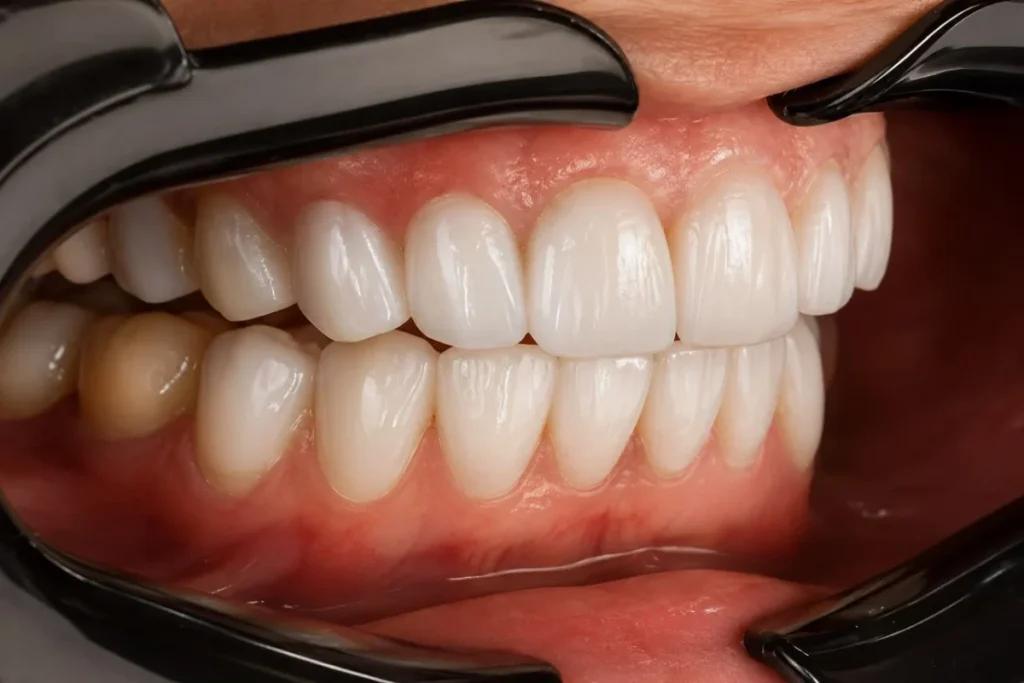
One benefit is that bonding can be conservative. In appropriately selected cases, little or no healthy enamel needs to be removed. It can offer a visible improvement without laboratory-made porcelain restorations, and a damaged area can often be polished, added to or repaired.
Another advantage is control. The dentist can adjust contours while you are present and assess how the result looks with your natural tooth colour and smile line. Some patients prefer this because they want a subtle improvement rather than a major change in appearance.
However, the treatment being quick does not mean it should be rushed. A natural result requires careful shade matching, contouring and attention to the bite and gum margins. The objective is a tooth that looks balanced and remains comfortable to clean and use.
What Are The Disadvantages Of Composite Bonding?
Composite is not as resistant to staining and wear as porcelain. Coffee, tea, tobacco and other staining habits may affect surface appearance over time. The resin can also chip, especially at thin edges or where teeth receive repeated heavy forces. Periodic polishing, repairs or replacement may be needed.
Bonding should not be advertised as permanent, stain-proof or guaranteed to last a set number of years. The Cleveland Clinic describes touch-ups or replacement as potentially necessary after approximately three to ten years, depending on the circumstances. That is a broad estimate rather than a prediction for your individual teeth.
There is also an aesthetic limit. If a tooth is very dark, the chosen composite may need extra thickness to mask it. If several teeth are severely misaligned, resin additions may not create a pleasing or healthy contour. In these situations, other treatments may provide a better balance between appearance, function and long-term care.
How Should You Look After Bonded Teeth?
Care is similar to looking after your natural teeth: brush twice daily with fluoride toothpaste, clean between the teeth every day and attend the check-ups advised by your dentist. Keeping the edges clean matters because plaque can collect around any restoration if its contour or your cleaning technique is unsuitable.
Avoid using bonded front teeth to open packaging, bite pens or crack very hard food. If you clench or grind at night, discuss whether a protective night guard is appropriate. Let your dentist know if an edge begins to feel sharp, rough or different when you bite.
Routine follow-up allows small issues to be identified before they become bigger repairs. A chip does not always mean the entire bonding has failed; depending on its condition, a repair may be possible. Bristol’s patient information on tooth-coloured composite fillings similarly highlights polishing, maintenance and the possibility of staining or fracture.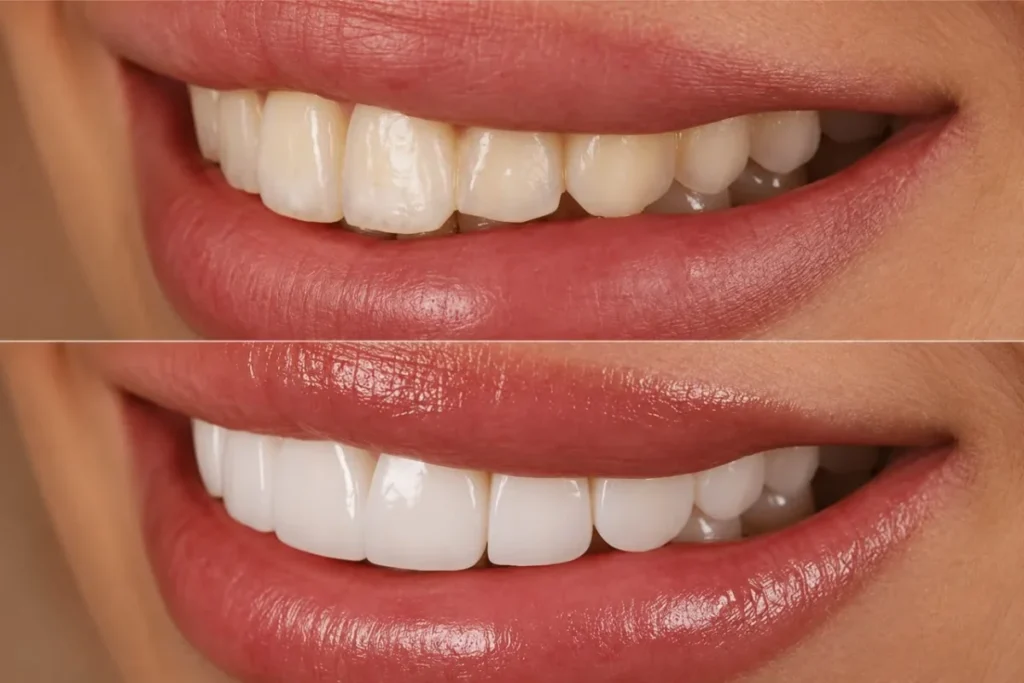
Bonding, Whitening, Veneers Or Aligners: Which Should You Consider?
These treatments address different problems. Whitening changes the shade of natural teeth but not their shape. Aligners move teeth when spacing or position is the concern. Composite bonding adds resin to improve selected contours or repair missing tooth structure. Porcelain veneers cover the front of teeth and may be considered when a greater aesthetic change is planned, but they commonly involve some enamel preparation.
There is no single treatment that is best for everybody. If you mainly dislike the colour of healthy teeth, adding resin may be unnecessary. If one front tooth has a small chipped corner, a porcelain veneer may involve more treatment than required. If your bite is causing repeated edge fractures, cosmetic repair without managing that cause may lead to repeated problems.
For more information about an alternative to bonding, La Clinique’s veneer treatment page explains how porcelain veneers are planned and maintained. Discuss the differences with a dentist before making a decision.
What Affects The Cost Of Composite Bonding?
The cost depends on the number of teeth involved, how much resin is needed, the complexity of shaping and any additional treatment required first. A small single-edge repair is not the same clinical task as rebuilding several worn teeth. The dentist may also discuss future costs for maintenance, polishing or repairs.
If you are comparing quotations in Dubai, ask exactly which teeth are included, whether any diagnostic or preparation visits are separate and what the plan is if a bonded edge chips. Price is relevant, but so are oral health, long-term maintenance and the treatment’s suitability.