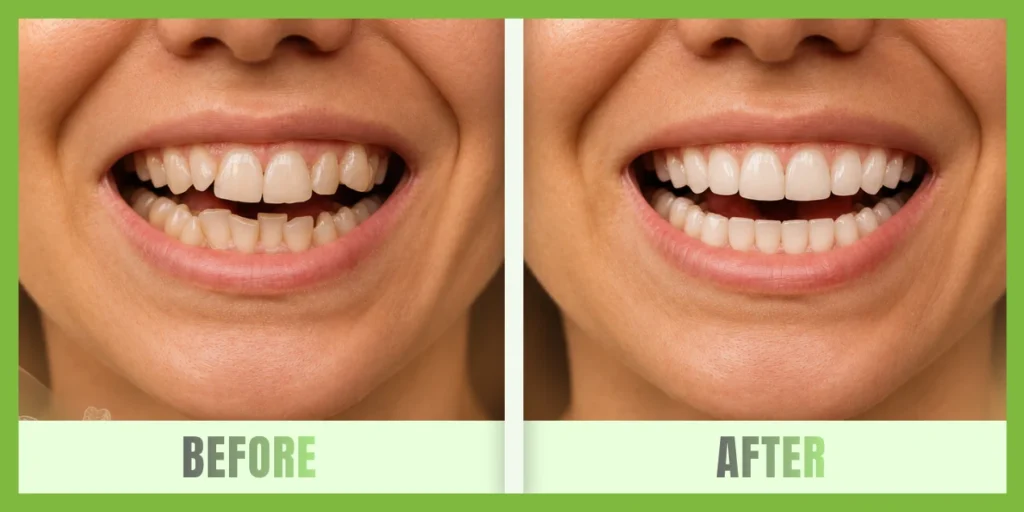
If you are searching for composite bonding before and after pictures, you probably want to know two things: what can actually change, and will the result look natural on your teeth? Composite bonding can improve the appearance of chipped edges, certain small gaps, irregular tooth shapes and localised wear by adding tooth-coloured resin. A difference may be visible immediately after treatment, but the degree of change varies with the original teeth, the bite, gum health and the amount of material that can safely be added. Photos can help you picture possibilities. They cannot establish what result your own teeth will achieve.
Composite bonding before and after photos show what is possible for an individual smile not a universal template. The most natural results come from matching treatment to your actual tooth health, bite, and proportions.
What Does Composite Bonding Change In Before And After Photos?
The clearest results usually involve tooth outline rather than dramatic repositioning. A chipped corner can regain a smoother shape. A tooth that looks shorter than its neighbour can be extended. A small space may be narrowed by adding a carefully judged amount of resin along the edges of adjacent teeth.
In a front-facing smile photograph, these changes may make the dental edges look more even. A close-up image may reveal finer details: contact points between teeth, the way light reflects from polished resin and whether the new shape follows the neighbouring enamel.
Bonding does not move a tilted tooth into position. It also does not change the natural colour of the tooth underneath in the way whitening does. Resin can mask some colour differences, but very dark teeth may be difficult to disguise conservatively.
Before And After: A Chipped Front Tooth
Imagine a front tooth with a small triangular piece missing from one corner. The before image would show an irregular incisal edge, perhaps especially noticeable when the patient smiles or speaks. After assessment, the dentist may add composite to rebuild that corner and polish it to match the neighbouring tooth.
A well-planned result should look smooth without making the edge unusually long or thick. The dentist also needs to check whether that corner contacts a lower tooth during biting or side-to-side movement. If the chip occurred during an accident, tenderness or a deeper crack must be assessed before calling it a straightforward cosmetic repair.
Illustrative scenario only, not a documented La Clinique patient case.
Before And After: Closing A Small Gap
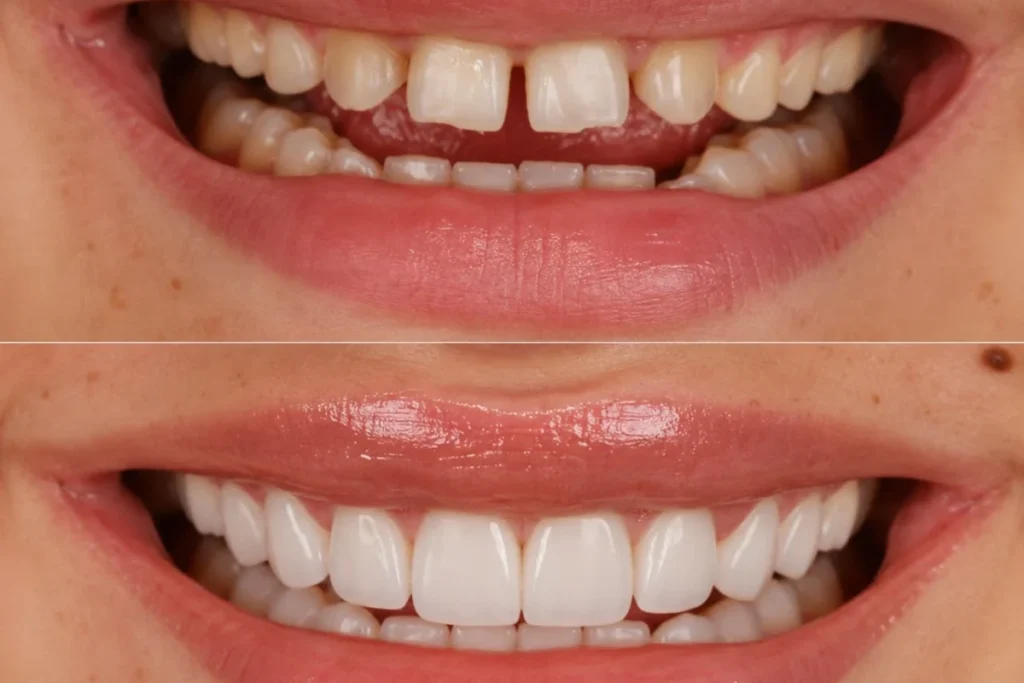
A second common example is a small gap between the upper central teeth. In appropriate cases, the dentist can add resin to one or both teeth to reduce the space. The key is proportion: if too much material is added, the front teeth may look wide or the contact area may become difficult to floss.
The gum shape also influences appearance. A narrow triangular space near the gum is not necessarily the same as a full gap between teeth. The dentist may discuss gum health, tooth shape and tooth position before proposing a cosmetic addition. Closing a space without understanding why it is there can produce an unsatisfactory result.
Illustrative scenario only. Patients with larger gaps or complex spacing may benefit from orthodontic evaluation rather than bonding alone.
Before And After: Uneven Or Worn Tooth Edges
Some adults notice that their two front teeth no longer look the same length, or that several edges have become flattened. Composite can build up selected surfaces and improve appearance, provided enough healthy tooth remains and the bite can accommodate the addition.
Wear is not simply a cosmetic issue. It may be linked to grinding, acidic drinks or reflux, and sometimes more than one factor is present. The underlying cause should be identified and managed to reduce further damage.
For a more extensive wear case, the dentist may need impressions, bite records, a planned mock-up or several appointments. The Bristol Dental School guide to composite build-ups notes that reshaping worn teeth can temporarily change how the bite feels. This is different from a small cosmetic edge repair.
Illustrative scenario only, not a claim that every worn tooth can be treated with bonding.
Why Do Some Composite Bonding Transformations Look More Natural Than Others?
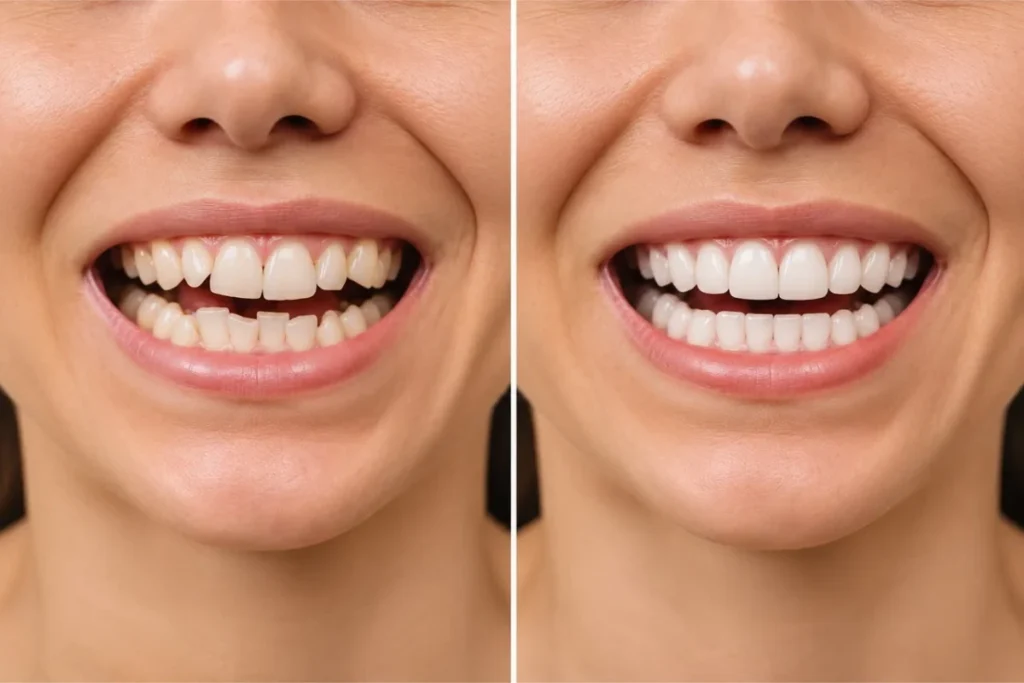
Natural appearance depends on more than making teeth white or symmetrical. Healthy teeth vary subtly in translucency, surface texture, width and edge position. A skilled restorative plan considers these features alongside facial proportions and the patient’s preferred level of change.
Shade matching matters. Composite resin must be chosen in relation to neighbouring teeth, which may have several colour zones. The thickness of resin affects how light passes through it. Surface polishing also matters because a smooth finish helps the material reflect light in a way that is closer to natural enamel.
A photograph can make small differences appear larger or hide them. Bright ring lights, filters and heavy editing may exaggerate whiteness or remove texture. It is reasonable to ask to see results taken in ordinary lighting and to discuss how they may look during everyday conversation.
How Should You Judge Before And After Dental Photos?
First, check that you are seeing the same teeth from a similar angle. A wider smile, different lip position or changed camera height can alter the apparent tooth shape even before treatment. The same principle applies to lighting and exposure; brighter images can make teeth look whiter without any treatment change.
Second, look for consistent labels. Did the patient receive bonding alone, or were whitening, aligners, gum treatment or veneers also involved? If several procedures were used, attributing the entire result to bonding would be misleading.
Third, ask when the after photograph was taken. An image from immediately after polishing shows the initial appearance, not how the material looks after years of eating, drinking and cleaning. Follow-up images can be more useful for understanding maintenance.
Finally, remember that every patient has a different starting point. A successful result for one person does not establish what is possible when your teeth have extensive wear, large spaces or complex alignment.
What Happens Between The Before And After Pictures?
A consultation comes first. The dentist asks what you want to change, examines the teeth and gums, assesses the bite and checks for conditions such as decay, fractures or gum inflammation. Clinical photographs may be taken for planning with your consent.
The shade is selected, then the tooth is cleaned and prepared for bonding. Tooth-coloured composite is placed, shaped and hardened with a curing light. The dentist refines the shape, checks the contact with other teeth, adjusts the bite if needed and polishes the surface.
A simple repair can often be completed in one appointment. Multiple teeth or a complex case may require a longer planning stage. Local anaesthetic is not always necessary for a conservative cosmetic addition, but needs vary with tooth condition and preparation. An immediately improved appearance does not eliminate the need for review.
What Will Your Teeth Feel Like After Bonding?
The bonded surface should feel smooth. You may notice a slightly different edge or new point of contact while your tongue becomes accustomed to the shape. Floss should pass through the contacts without repeatedly shredding or getting trapped. If the new tooth feels too high when biting, ask for an adjustment rather than waiting for it to wear down.
Mild sensitivity may occur in some patients, especially when a tooth had previous damage or additional preparation. Persistent pain, a significant bite change, swelling or sensitivity that worsens needs assessment; these symptoms should not be dismissed as part of cosmetic treatment.
You can usually return to ordinary daily activities quickly. Follow the dentist’s specific advice, particularly if the bonding formed part of a broader reconstruction of worn teeth.
How Long Will The After Result Look The Same?
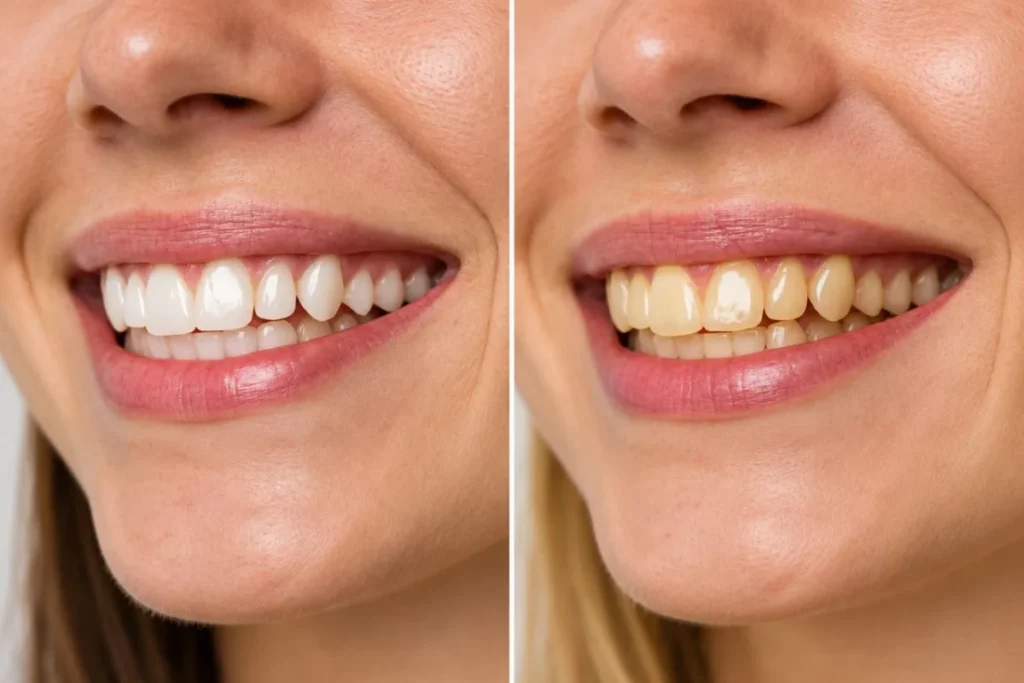
The first-day photograph is a starting point, not a permanent guarantee. Over time, composite may pick up surface stains, become less glossy, wear at the edges or chip. Its appearance and longevity depend on the amount and location of resin, oral hygiene, grinding, habits and routine maintenance.
The American Dental Association’s guidance on veneers explains that composite materials can be repaired more easily than porcelain but are generally less resistant to staining and wear. Research on direct anterior composite restorations also shows variable outcomes across different case types. A systematic review of long-term anterior composite restorations identifies fracture and clinical technique among important considerations, without supporting one universal lifespan.
Maintenance may involve polishing, a small addition, replacement of a chipped section or treatment of a new problem. If your dentist identifies grinding, a night guard may be considered. This helps protect the investment, although no appliance eliminates every possible risk.
Can Composite Bonding Replace Whitening Or Straightening?
Sometimes the concern is not the tooth shape at all. If healthy teeth are evenly shaped but darker than desired, whitening may be more conservative than covering them in composite. Importantly, the whitening does not change the colour of existing fillings or veneers, so shade decisions should be coordinated before cosmetic bonding.
If crowded or tilted teeth create the uneven appearance, clear aligners or other orthodontic care may treat the actual tooth position rather than making the teeth look straighter by adding bulk. For a more comprehensive smile plan, La Clinique ME’s smile makeover information outlines how different dental treatments may be considered together.
What Should You Ask At A Smile Consultation In Dubai?
Bring a few photographs of results you like, but explain what you like about them: a softer edge, a smaller gap or a natural rather than very bright shade. Ask which changes are realistic without removing healthy enamel, whether other treatment is needed first and how the result will affect your bite.
Discuss the expected number of appointments and teeth involved. Ask what follow-up care may be necessary, what happens if an edge chips and whether your dentist recommends a trial shape before treating multiple teeth. These questions are more useful than asking a dentist to copy a smile from social media.