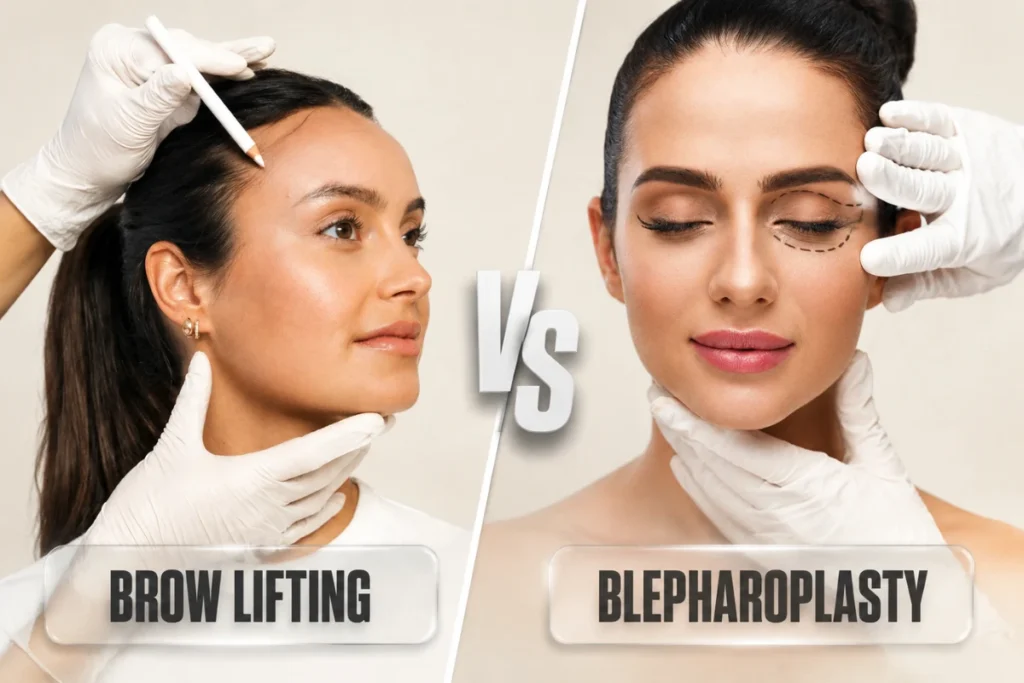
If your eyes look tired, heavy or older than you feel, you may wonder whether a brow lift or blepharoplasty would address the problem.
The main difference is where the concern originates. A brow lift repositions a lowered brow and addresses tissues of the forehead and eyebrow area, while blepharoplasty focuses directly on excess skin and other tissues of the upper or lower eyelids.
However, the distinction is not always obvious when you look in the mirror. A low brow can make the upper eyelid appear heavier, while excess upper-eyelid skin can create a similar appearance even when the brow is in a suitable position.
For this reason, choosing between brow lift vs blepharoplasty should begin with identifying what is actually causing the heaviness around your eyes.
A brow lift raises a lowered brow, while blepharoplasty focuses on the eyelids. The right procedure depends on whether brow descent, excess eyelid skin, or both are contributing to the appearance of heavy or tired eyes.
What is a Brow Lift?
A brow lift, sometimes called a forehead lift, is a surgical procedure designed to reposition the eyebrows and tissues of the forehead.
It may be considered when the eyebrows have descended and are contributing to a tired, heavy or stern appearance around the upper face. Brow lift surgery can also affect forehead lines and the position of the brow.
Depending on the person’s anatomy and surgical plan, different brow-lifting techniques may be used. These can involve endoscopic approaches through small scalp incisions, longer incisions within the hair-bearing scalp or approaches around the hairline.
A brow lift may address:
- eyebrows that sit lower than desired
- heaviness caused partly by brow descent
- lowering of the outer portion of the eyebrow
- forehead tissues that have descended with age
- certain forehead and frown-line concerns
The important point is that a brow lift primarily changes the position of the brow and forehead tissues. It is not simply another name for eyelid surgery.
What is Blepharoplasty?
Blepharoplasty is surgery performed on the eyelids.
It may involve the upper eyelids, lower eyelids or both, depending on the concern being treated.
In upper blepharoplasty, the surgeon may remove or reposition selected excess skin and other tissues around the upper eyelid. Lower blepharoplasty is used for different concerns involving the lower eyelid area.
For someone comparing a brow lift or eyelid surgery because of heaviness above the eyes, upper blepharoplasty is usually the more relevant comparison.
Upper blepharoplasty may address:
- excess upper-eyelid skin
- folds of skin that make the eyelids appear heavy
- selected fat prominence around the upper eyelids
- changes in the eyelid area that create a tired appearance
Blepharoplasty focuses on the eyelids themselves rather than repositioning a significantly lowered eyebrow. Clinical evaluation before upper eyelid surgery therefore includes assessment of brow position as well as the eyelid.
Brow Lift vs Blepharoplasty: What is the difference?
The easiest way to understand blepharoplasty and brow lift is to look at the anatomical area each procedure is designed to change.
| Brow Lift | Blepharoplasty | |
| Main area treated | Eyebrows and forehead | Upper or lower eyelids |
| Main concern | Low or descended brow position | Excess eyelid skin and selected eyelid tissue |
| Does it lift the brow? | Yes, this is a primary purpose | Not primarily |
| Does it remove excess upper-eyelid skin? | Not directly | Can do so |
| May improve heaviness above the eyes? | Yes, when brow descent contributes | Yes, when excess eyelid tissue contributes |
| Affects forehead appearance? | Can | Generally not the main purpose |
| Can the procedures be combined? | Yes, in selected patients | Yes, in selected patients |
Neither procedure is automatically “better”. The correct treatment depends on why the eye area looks heavy in the first place.
Why can a Drooping Brow look like Droopy Eyelids?
This is where patients can easily become confused.
The brow sits immediately above the upper eyelid. When the brow descends, particularly towards the outer side, it can push the tissues above the eye downward. This may create what looks like additional upper-eyelid skin.
Some people also unconsciously activate their forehead muscles to hold their brows higher. During a clinical examination, relaxing those muscles can reveal the true position of the brow and help distinguish brow descent from excess eyelid skin. Published reviews of upper blepharoplasty emphasise that brow position should be examined before planning eyelid surgery.
This is why choosing surgery based only on what looks like “droopy eyelids” can be misleading.
The specialist needs to determine whether the heaviness is coming mainly from:
- the brow
- the eyelid skin
- both areas
- or another eyelid condition
Is a Brow Lift better for a Low Brow?
If the main issue is that the eyebrows themselves have descended, a brow lift may address the source of the concern more directly.
Signs that may point towards brow position being important include:
- eyebrows sitting noticeably low
- heaviness concentrated around the outer eyebrow
- forehead muscles constantly working to raise the brows
- upper-eye heaviness that changes when the brow is gently repositioned
- concerns involving both brow position and forehead appearance
A brow lift allows the surgeon to reposition brow and forehead tissues rather than simply removing eyelid skin.
However, these signs are not a diagnosis. Facial proportions, natural brow shape, sex, age and personal preferences all influence what represents an appropriate brow position.
Is blepharoplasty better for excess eyelid skin?
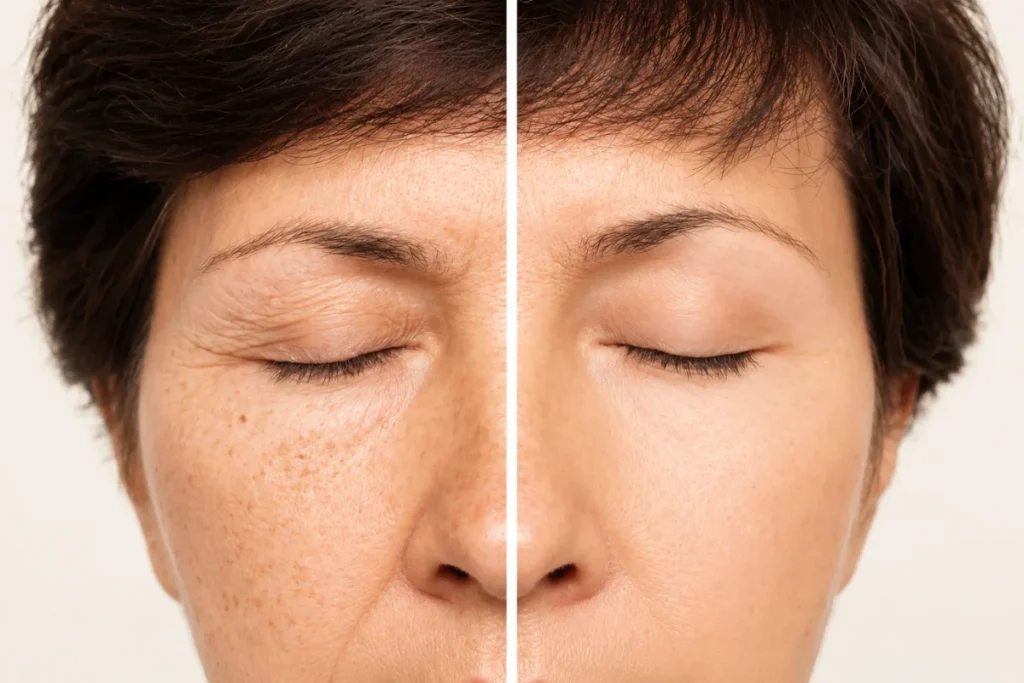
If the brow is already in an appropriate position but excess upper-eyelid skin is the main concern, blepharoplasty may address that issue more directly.
An examination may assess:
- the amount of excess eyelid skin
- eyelid crease and contour
- fat distribution
- eyelid position
- brow position
- symmetry
- eye-surface or dry-eye symptoms
- whether another form of eyelid drooping is present
Blepharoplasty can improve the appearance of the eyelids, but it should not automatically be expected to correct a low eyebrow.
What if you have both a low brow and excess eyelid skin?
It is possible to have both.
Ageing around the upper face does not occur in only one structure. Changes can affect the forehead, brow and eyelids at the same time.
In selected patients, combining a brow procedure with upper blepharoplasty may therefore be considered when both brow descent and excess eyelid tissue are contributing to the appearance. Medical literature discussing upper-face evaluation recognises that brow lifting and blepharoplasty can be performed together when appropriate.
That does not mean everyone who has eyelid surgery also needs a brow lift.
Adding another procedure should be based on anatomy and the desired outcome, not simply on the assumption that more treatment will produce a better result.
Are “Droopy Eyelids” Always Treated With Blepharoplasty?
No.
The phrase droopy eyelids can describe several different problems.
One important distinction is between excess upper-eyelid skin and true eyelid ptosis, also called blepharoptosis.
With true ptosis, the upper eyelid margin itself sits lower than expected, often because of a problem involving the structures responsible for lifting the eyelid. This is different from having loose skin over the eyelid.
Someone with true eyelid ptosis may require a different procedure directed at the eyelid-lifting mechanism rather than standard cosmetic blepharoplasty alone.
This is another reason a proper assessment matters before choosing among different droopy eyelids treatment options.
Benefits and Limitations of Brow Lift and Blepharoplasty
Brow Lift
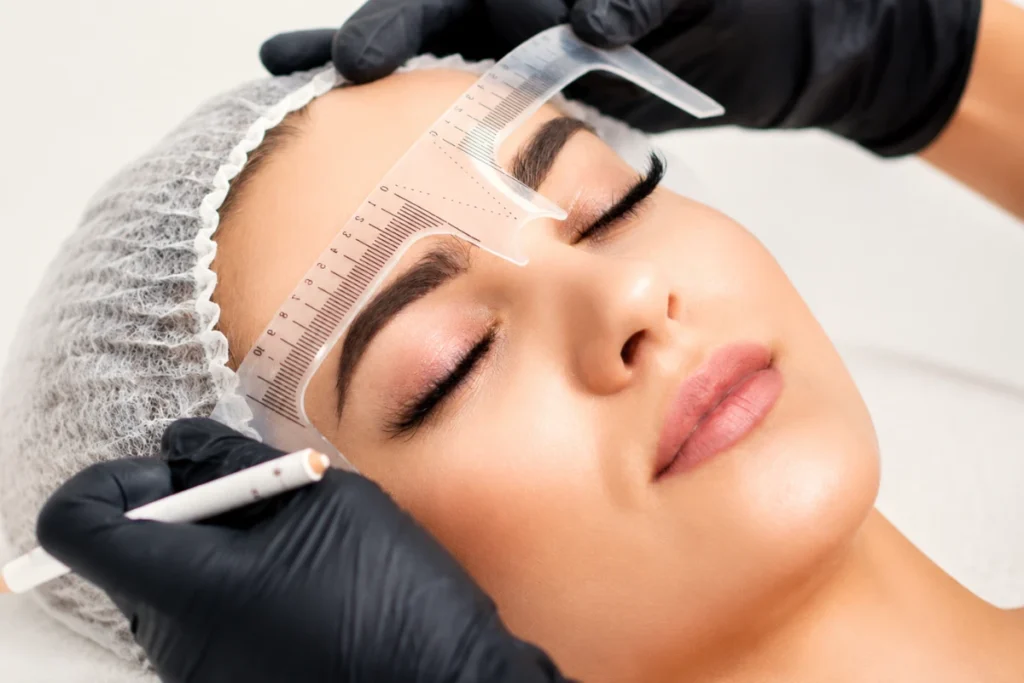
Potential benefits
A brow lift may:
- reposition a descended eyebrow
- reduce heaviness caused by low brow tissues
- improve proportions of the upper face
- address selected forehead concerns
Limitations
A brow lift does not directly remove excess eyelid skin and may not solve heaviness caused primarily by the eyelid itself.
Different surgical techniques also produce different scars, degrees of elevation and recovery experiences.
Blepharoplasty
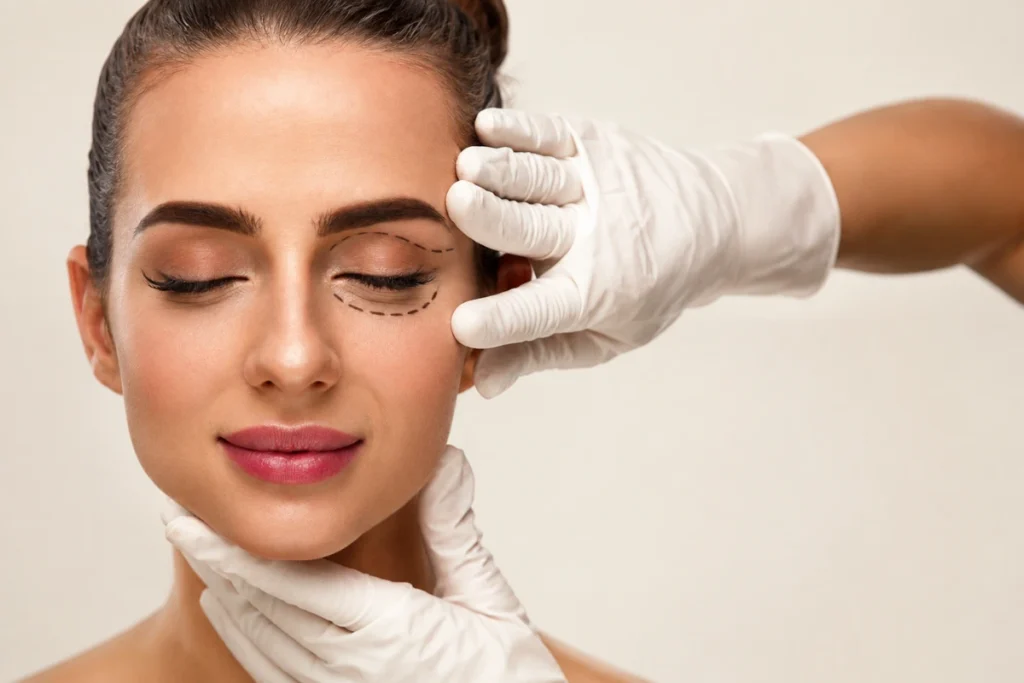
Potential benefits
Upper blepharoplasty may:
- remove selected excess eyelid skin
- refine the contour of the upper eyelid
- reduce a heavy appearance when the eyelid itself is the main cause
Limitations
Blepharoplasty does not primarily reposition a low brow and is not the same as treatment for true eyelid ptosis.
The best result therefore depends on correctly identifying the underlying anatomy before surgery.
Which option may be right for You?
When deciding between a brow lift and eyelid surgery, try not to start with the procedure.
Start with the concern.
For example:
“My eyebrows look lower than they used to.”
A brow assessment is particularly important.
“My eyebrow position looks fine, but I have excess skin folding over my eyelids.”
Upper blepharoplasty may be more relevant.
“Both my brow and eyelids feel heavy.”
Both areas should be evaluated because more than one structure may be contributing.
“My actual eyelid margin is drooping.”
Your specialist should assess for eyelid ptosis rather than assuming the problem is excess skin.
“I mainly want my eye area to look less tired.”
This description alone does not tell you which procedure is appropriate. Several anatomical changes can produce a tired appearance, so examination is needed before choosing among facial rejuvenation options.
What should you consider before treatment?
Patients considering upper-face rejuvenation in Dubai should have an individual assessment rather than choosing a procedure from photographs or social media examples. A consultation should consider more than whether you prefer a brow lift or blepharoplasty.
Your Brow Position
The specialist should assess where your brow naturally sits when your forehead is relaxed.
Your Eyelid Anatomy
The amount and distribution of skin, fat and other eyelid tissues should be examined.
Eyelid Ptosis
The position of the eyelid margin and its movement should be considered where relevant.
Facial Symmetry
Almost everyone has some degree of natural asymmetry. Understanding this before surgery helps establish realistic expectations.
Eye Health
Dry-eye symptoms, previous eye procedures and relevant medical history may affect surgical planning.
Your Goals
Some people want subtle rejuvenation without changing the natural character of their eyes. Others are more concerned about brow position or eyelid heaviness.
Explain what bothers you and what you hope will change, rather than arriving with a fixed procedure in mind.
Both brow lift and eyelid surgery carry possible complications, including bleeding, infection, asymmetry, scarring and procedure-specific risks. A qualified surgeon should discuss these risks and the expected recovery before treatment.
You can read more about the brow lift procedure or explore eyelid surgery if you would like to understand how the individual procedures are performed.
Brow Lift or Blepharoplasty? Start With the Cause
The choice between brow lift vs blepharoplasty is less about which procedure is better and more about which anatomical area needs to be treated.
A brow lift primarily addresses a lowered brow and forehead tissues. Blepharoplasty focuses on the eyelids. Some people have changes in both areas, while others may have true eyelid ptosis that requires a different approach altogether.
If you are unsure which option may be suitable for your concerns, speak with a qualified specialist at La Clinique for an assessment of your brow, eyelids and overall facial proportions before deciding on treatment.