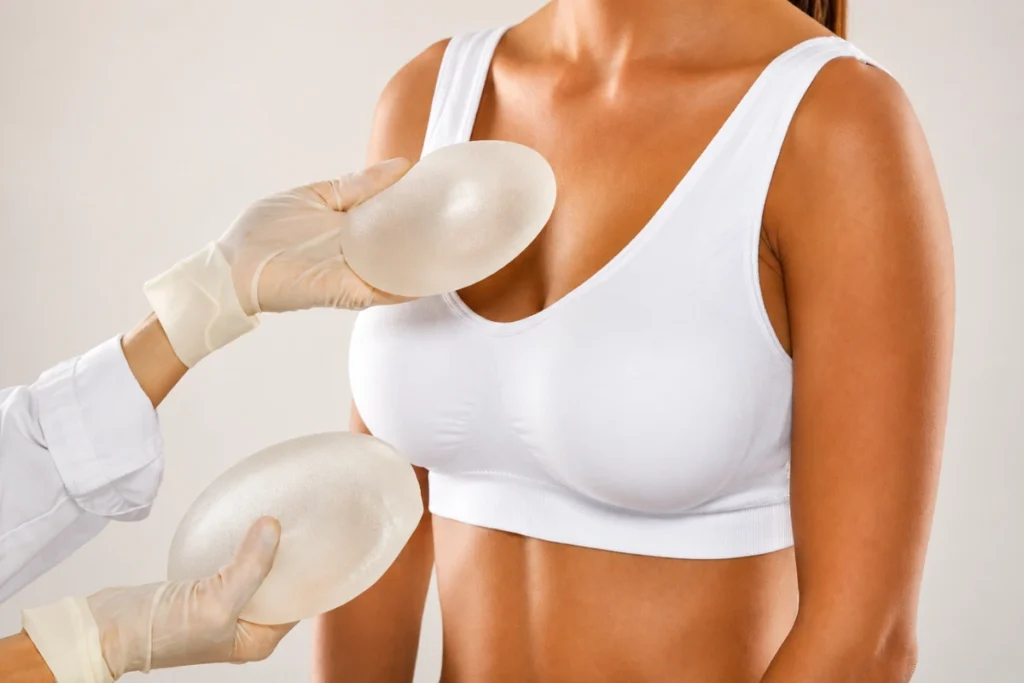
Choosing a breast implant size is not simply about selecting a cup size or deciding how many cubic centimetres you want.
The right implant needs to suit your chest dimensions, existing breast tissue, skin quality, body proportions and the result you would like to achieve. Two people who want a similar increase in breast size may therefore be advised to consider very different implants.
A useful breast implant size guide should help you understand these factors rather than give you one number that is supposed to work for everyone.
Breast implants are available in different volumes, widths, projections and profiles. Research on implant selection supports an individual, tissue-based approach that considers the patient’s measurements and breast characteristics rather than choosing an implant based on volume alone.
There is no single implant size that works for everyone. The right choice depends on your anatomy, existing breast tissue, implant width and profile, body proportions and the look you want to achieve.
How Are Breast Implant Sizes Measured?
Breast implants are generally measured by volume in cubic centimetres, or cc.
You may therefore hear implant sizes described as:
-
- 250 cc
-
- 300 cc
-
- 350 cc
-
- 400 cc
However, the cc number tells you only the volume of the implant. It does not tell you exactly how the implant will look on your body.
Breast implants can differ in their:
-
- width
-
- height
-
- projection
-
- profile
-
- shape
-
- filling material
The FDA notes that breast implants are available in different sizes and shapes, and these device characteristics vary between implant types.
This is why choosing a breast implant simply because someone else had a particular number of cc is rarely useful.
A 300 cc implant, for example, may look quite different on a person with a narrow chest compared with someone with a broader chest.
Is There a Breast Implant Size Chart?
Patients often look for a breast implant size chart that converts implant volume directly into bra cup size.
Unfortunately, there is no universal chart that can reliably tell you:
“300 cc = C cup” or “400 cc = D cup.”
Bra sizing varies between manufacturers, and the same implant volume can create a different appearance depending on your existing breast volume, chest width, implant profile and anatomy.
Some research has tried to estimate how implant volume relates to changes in cup size, but the amount varies according to bra band size and individual anatomy.
For this reason, cup size can be useful when explaining your general preference, but it should not be the only way you choose an implant.
It is often more helpful to describe the look and proportions you want.
For example:
-
- subtle increase in volume
-
- fuller upper breast
-
- more projection
-
- balanced proportions
-
- a noticeable but proportionate enhancement
-
- a more natural-looking change
Your surgeon can then assess which implant dimensions may realistically create that result for your body.
What Factors Affect the Ideal Breast Implant Size?

There is no single ideal breast implant size for everyone. Several factors need to be considered together.
1. Your Chest and Breast Width
One of the most important measurements during breast implant selection is the width of your existing breast and chest.
The implant generally needs to fit appropriately within the anatomical width available.
Studies describing tissue-based planning identify breast base width, tissue thickness and skin characteristics as important factors when selecting implant dimensions.
This is one reason why two women of the same height or dress size may still require very different implant dimensions.
2. Your Existing Breast Tissue
The amount of natural breast tissue you already have influences how an implant will look and feel.
Someone with more existing breast tissue may have different options from someone with a very thin tissue covering.
Your surgeon may assess:
-
- how much breast tissue is present
-
- where the tissue is distributed
-
- how thick the soft-tissue covering is
-
- whether there is any asymmetry
-
- whether the breasts have changed after pregnancy, breastfeeding or weight loss
These findings help determine which implant dimensions can be appropriately supported by the existing tissues.
3. Skin Quality and Elasticity
The skin and soft tissues must accommodate the implant. During your consultation, your surgeon may assess how firm or loose the breast skin is and whether there is stretching or sagging.
A person with firm skin and limited breast tissue may require a different approach from someone whose breast envelope has stretched after pregnancy or significant weight change.
Tissue-based planning methods specifically take the skin envelope and soft-tissue characteristics into account when selecting implants.
4. Implant Profile and Projection
Volume is only part of the picture. Implant profile describes how much the implant projects forwards in relation to its width.
Depending on the manufacturer, profiles may be described using terms such as:
-
- low
-
- moderate
-
- moderate plus
-
- high
-
- extra-high
The exact terminology varies between implant ranges.
Two implants may contain a similar volume but have different widths and projections. One may be wider and project less, while another may have a narrower base and project further forwards.
This means implant profile can significantly affect the final proportions.
5. Your Body Proportions
Height and body weight alone do not determine implant size.
Your surgeon will usually look at your overall proportions, including:
-
- shoulder width
-
- chest width
-
- torso length
-
- natural breast position
-
- breast width
-
- waist and hip proportions
The aim is not necessarily to follow a mathematical formula. Instead, these measurements help establish which implant dimensions are compatible with your anatomy and desired appearance.
6. Your Existing Breast Shape
Implants increase volume, but they do not correct every breast concern in the same way.
For example, someone with:
-
- significant breast drooping
-
- stretched skin
-
- noticeable asymmetry
-
- different nipple positions
may need a different surgical plan from someone whose main concern is simply reduced breast volume. Breast lift surgery may be considered when improving breast position and contour is part of the goal.
Your surgeon therefore needs to assess the breast itself before deciding whether implant size alone can address your goals.
7. The Look You Want
Your preferences remain an important part of the consultation. One patient may want a subtle change that is difficult to notice, while another may prefer greater upper breast fullness or projection.
Try to explain what you want your breasts to look like, rather than focusing only on a cup letter or cc number.
Reference photographs can sometimes help communicate your preferences, although another person’s result cannot be copied exactly because anatomy differs from patient to patient.
Breast Implant Size: Volume vs Profile
The table below shows why implant volume alone does not determine the final appearance.
| Factor | What It Means | Why It Matters |
| Volume (cc) | Amount the implant contains | Influences overall breast volume |
| Width | Diameter or base width of the implant | Needs to relate to the width of the breast and chest |
| Projection | How far the implant extends forwards | Influences how prominent the breast appears from the side |
| Profile | Relationship between implant width and projection | Can create a wider or more projecting appearance |
| Existing tissue | Natural breast tissue covering the implant | Influences contour and implant visibility |
| Skin quality | Firmness and elasticity of the breast envelope | Influences how the breast accommodates additional volume |
This is why a proper breast implant size guide cannot simply rank implants from “small” to “large”. The same cc volume can produce very different proportions depending on the implant dimensions and the patient’s anatomy.
How Does a Surgeon Choose Breast Implant Size?
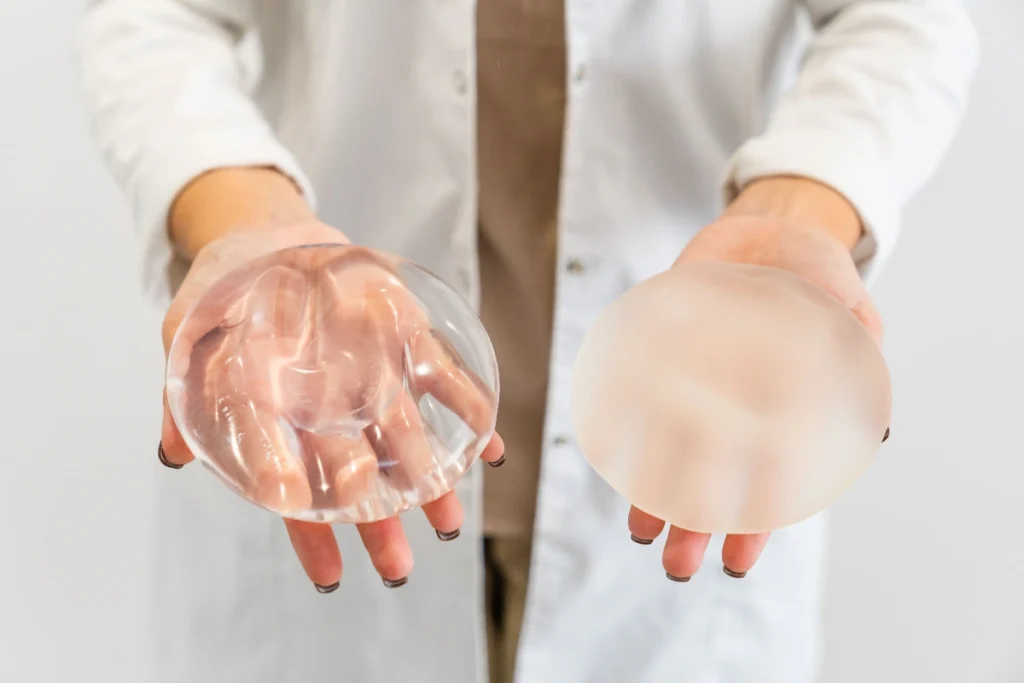
During a consultation, implant selection usually involves a combination of clinical examination, measurements and discussion about your goals.
Your surgeon may assess:
-
- breast base width
-
- chest dimensions
-
- existing breast volume
-
- skin and tissue thickness
-
- breast symmetry
-
- nipple position
-
- desired amount of volume and projection
-
- implant shape and profile
-
- planned implant placement
Evidence reviewing different implant-selection methods suggests that approaches based on the patient’s tissue measurements can provide a more structured way to choose suitable implant dimensions.
The goal is therefore not simply to find the biggest or smallest implant you like.
It is to find a range of implants that fits your anatomy and then determine which option best matches your preferred result.
Can You Try Breast Implant Sizes Before Surgery?
Some consultations may use implant sizers or 3D imaging to help patients visualise different possibilities.
Temporary external sizers can give you a general idea of how additional volume may look under clothing. Digital imaging may also help demonstrate differences in volume or projection.
However, these tools should be viewed as planning aids rather than guarantees of the final result.
Your actual outcome will depend on factors such as your tissue characteristics, implant position, healing and how the breast settles following surgery.
Clinical measurements and examination therefore remain an important part of the decision.
Does a Bigger Implant Give a Better Result?
Not necessarily. Choosing a larger implant does not automatically create a more attractive or proportionate result.
Likewise, choosing a smaller implant is not automatically more “natural”.
What looks balanced depends on the relationship between:
-
- implant dimensions
-
- natural breast tissue
-
- chest width
-
- skin envelope
-
- body proportions
-
- personal preference
The most appropriate implant is one selected after considering all of these factors together.
Breast implants also involve recognised short- and long-term risks, and implant surgery should involve a proper discussion about expected outcomes, limitations, potential complications and future monitoring. Patients can also review the breast implant patient decision checklist to better understand the risks and considerations involved before surgery.
What Should You Ask During Your Consultation?
Patients considering cosmetic breast surgery in Dubai may find it useful to arrive at the consultation with questions rather than trying to choose an implant size beforehand.
Consider asking:
-
- What is my breast base width?
-
- Which range of implant sizes suits my anatomy?
-
- Why are you recommending this particular width or profile?
-
- How would a lower or higher profile change the appearance?
-
- How much existing breast tissue do I have?
-
- Will my skin comfortably accommodate the suggested implant?
-
- Do I have breast asymmetry that needs to be considered?
-
- Can I compare more than one implant size?
-
- What are the advantages and limitations of each option?
-
- What risks should I understand before deciding?
If you are considering a breast augmentation procedure, the consultation should help you understand not only the implant volume, but also why a particular implant dimension has been recommended for your body.
Common Mistakes When Choosing Breast Implant Size

1. Choosing Based Only on a Friend’s Implant Size
Someone else’s 350 cc result cannot reliably predict how 350 cc will look on you.
Body proportions and breast dimensions differ.
2. Focusing Only on Cup Size
Bra cup sizes are not standardised enough to be used as a precise surgical measurement.
Use cup size as a general communication tool rather than an exact target.
3. Assuming More CC Means More Projection
A larger-volume implant is not automatically more projecting.
Width and profile matter as well.
4. Ignoring Your Natural Anatomy
An implant must work with the tissues you already have.
This is why clinical measurements are an important part of choosing breast implant size.
5. Choosing From Photos Alone
Reference photographs can help communicate preferences, but another person’s breast shape cannot simply be recreated.
It is more useful to identify what you like about the photograph; for example the amount of upper fullness, projection or overall proportion.
Choosing the Right Breast Implant Size Is a Personal Decision
There is no formula that can identify the perfect breast implant size from your height, weight or preferred cup size alone.
Good breast implant selection considers both sides of the decision: what you would like to achieve and what your anatomy can appropriately support.
Volume matters, but so do implant width, projection, profile, existing breast tissue, skin quality and overall proportions.
If you are considering breast enhancement in Dubai and are unsure which implant size may be suitable for your body and goals, speak with a qualified specialist at La Clinique for personalised assessment and guidance.